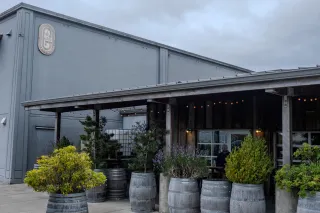
Heading down from Tacoma I drive the boring part of the 101. Through Astoria and Seaside, eventually you pass the cheese factory where three hundred tourists are queued up to taste grocery store cheese, and then you pull into a brewery that is quietly making some of the best spontaneously fermented beer on this continent. Trevor and Linsey Rogers have been at it in Tillamook since 2013, and the whole operation is built on a bet that most breweries won't make: The single most valuable ingredient is time, and there is no substitute for it.
Here's the thing people don't understand when they say they "don't like sours." What most taprooms pour is a kettle sour. You pitch lactobacillus into the wort, hold it warm overnight, boil it to kill everything, ferment with clean ale yeast, dump in fruit puree, and you're pouring it in under three weeks. It is fast, repeatable, and costs almost nothing in tank time... and it tastes like it — a flat lactic zing with fruit sitting on top like a decal. One note, loudly played. It exists because a tank that turns eighteen times a year makes money and a tank that turns once every three years does not.
de Garde does the other thing. Wort goes into a coolship overnight and is inoculated by whatever is drifting through the Tillamook Valley air — a wet, marine, dairy-country microflora money can't buy, replicate, or ship. Then it goes to oak and it waits. Years. The bacteria munch their share, then oxygen creeps through the barrel staves. Esters build. The beer changes character three or four times before anyone tastes it. Then it's blended across barrels and vintages by palate, macerated on absurd quantities of Oregon fruit — marionberry, apricot, sour cherry, plum, whatever the valley gave up that year — and bottle conditioned for months or more. Nobody can rush that. Nobody can shortcut it. You either commit years of capital and barrel space and accept that some barrels will go wrong, or you don't do it.
The end product is worth it! The acidity has depth and shape instead of a spike — lemon oil, hay, damp oak, a little funk; fruit that reads as actual fruit rather than syrup. It finishes bone dry because the bugs ate everything. The taproom is unfussy and pours generously.
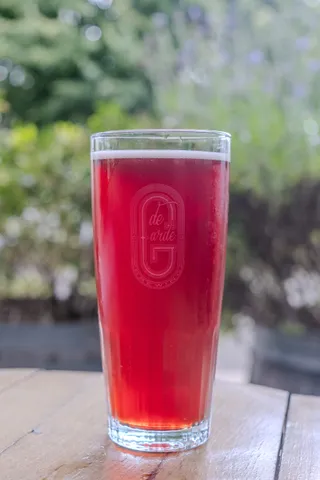
These are wild ales, so the live lactobacillus, pediococcus, and brettanomyces are still in there — the same families of organisms people pay good money for in kombucha and yogurt. The multi-year fermentation leaves almost no residual sugar, so it's a dry. The carbs are gone and there's real polyphenol content coming off the oak and fruit skins. If you're going to drink, choose quality. Something that spent three years becoming itself is a good way to do it.
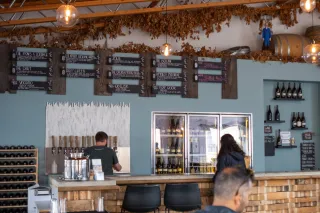
de Garde is a semi-annual pilgrimage for me. Maybe it should be for you, too?