Somewhere around 5:30pm on our third night, my wife and I were kneeling in front of a crack in a lava rock, feeding marshmallows into it on wooden skewers, waiting for an active volcano to toast our dessert. That's the moment I knew this trip wasn't going to be a normal "look at the pretty church" kind of vacation — although, to be fair, we did plenty of that too.
We spent five days in Antigua, Guatemala, the old colonial capital tucked into a valley ringed by three volcanoes about 45 minutes from Guatemala City. If you're planning your own trip, here's exactly how ours went, day by day, plus what we'd tell a friend before they go.
Quick trip overview: 5 days / 4 nights, based in Antigua's La Merced neighborhood, day trips to Pacaya Volcano and Hobbitenango, zero rental cars, a lot of cobblestones.
Getting There and Where We Stayed
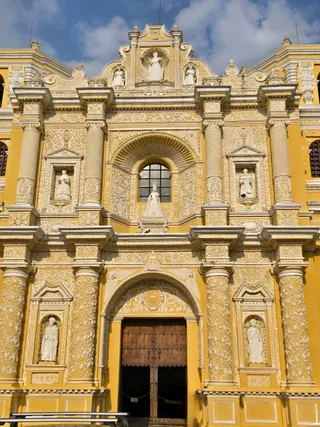
Antigua doesn't have its own airport — you fly into La Aurora in Guatemala City and then it's about 45 minutes by shuttle or car through the hills. We stayed in the La Merced neighborhood, a few blocks north of the main square, which turned out to be a great home base: quiet enough to sleep, close enough to walk everywhere, and about as photogenic a corner as the city has to offer, since the La Merced church itself is right there.
Day 1: Landing and Chasing Golden Hour at La Merced
We got in with just enough daylight left to drop our bags and go find something to look at, and La Merced did not disappoint. The church is this almost absurdly ornate mustard-yellow confection — white stucco garlands, saints in little alcoves, the whole wedding-cake look Antigua is famous for — and in the early evening light it looks like it's lit from within.
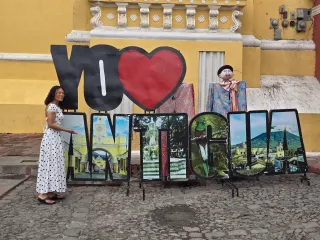
Right out front, someone's set up one of those big "I ❤️ ANTIGUA" letter signs with the giant folk-art puppet heads (gigantes) standing next to it in traditional dress. It's touristy, sure, but it turned out to be the first of many stops we'd make back at this same corner over the trip.
Day 2: A Full Day Wandering the Colonial Core
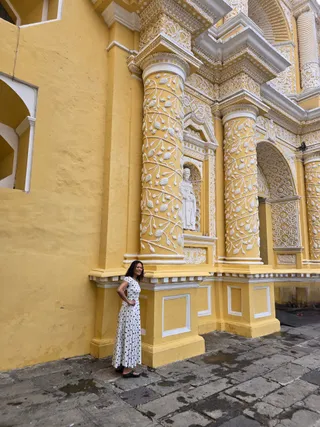
Day two was the day we didn't really have a plan, which in Antigua is the correct plan. We went back to La Merced in the morning with the real camera to get the detail shots, the little saint statues tucked into their niches, the vine-and-grape relief carved into the columns, and then just let the streets pull us around for the rest of the day.
A few things worth calling out from that wander:
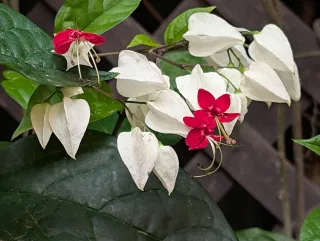
We ducked into a courtyard somewhere for lunch and got completely distracted by a bleeding-heart vine (Clerodendrum thomsoniae) dripping white and red flowers over a wooden trellis — one of those plants you don't expect and then can't stop photographing.
Around mid-afternoon we found our way into a dim little cocktail bar with a leaf-covered ceiling strung with lanterns and blue under-shelf lighting — the kind of place that doesn't advertise itself from the street, and exactly the spot to sit out the hottest part of the day.
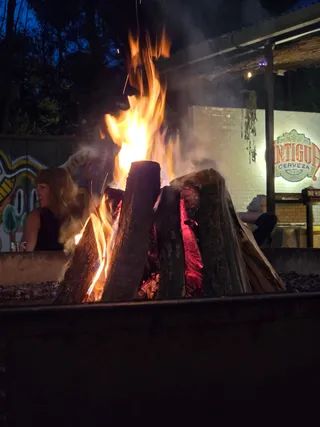
We ended the night at Antigua Cerveza's El Bosque taproom, which is set back in the trees on the edge of town, and sat around a proper bonfire with local craft beer until it got fully dark. If you want a break from the churches-and-ruins itinerary for one evening, this is it.

Day 3: Convent Ruins in the Morning, an Active Volcano at Sunset
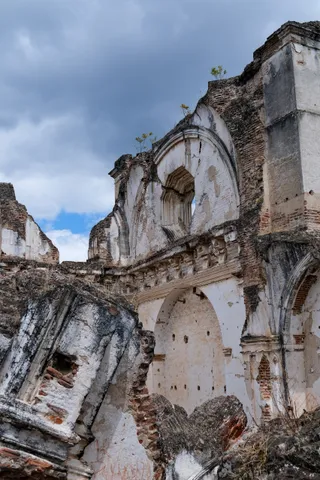
This was the big day. We started early, walking through the ruins of what we're pretty sure was La Recolección — one of the convents flattened by the 1773 earthquake that ended up pushing the capital to Guatemala City. Antigua has several of these roofless, half-collapsed churches scattered around, but La Recolección's are on a different scale — whole sections of vaulted ceiling just lying at angles, brick showing through cracked white plaster, weeds growing out of the tops of walls three stories up. Under a grey sky it looks less like a tourist site and more like something you stumbled onto by accident.
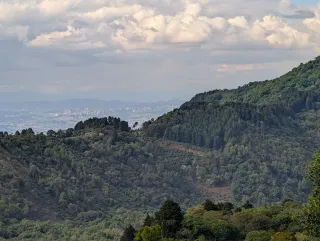
Then in the afternoon, we did the thing you have to do near Antigua: the Pacaya Volcano hike. A van picks you up and drives you about 45 minutes south to the trailhead near San Vicente Pacaya. The hike itself starts with a view back over the valley toward Guatemala City and Lake Amatitlán, then climbs up through pine forest before dumping you out onto an actual field of hardened lava rock.
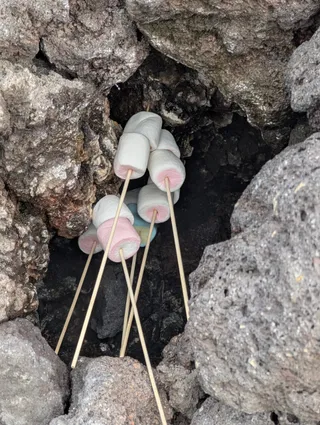
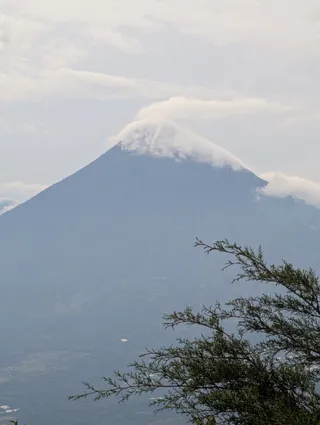
And yes — the marshmallow thing is real. Guides find a crack in the rock that's still hot enough from geothermal activity, and you stick marshmallows on skewers and roast them right in the stone. It's a little absurd and completely worth it. On the way back down, right as the light was going gold, one of the volcanoes — Agua, most likely, based on where we were standing — came into view with its summit wrapped in a scarf of cloud, and it was one of those "okay, this is why we travel" moments.
Bring closed-toe shoes for this one. The lava rock is sharp and the footing gets loose near the top.
Day 4: Hobbitenango, Then Chocolate
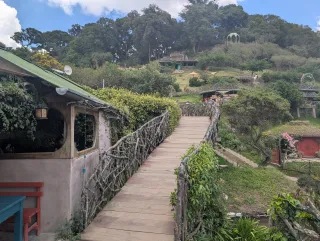
We'd seen Hobbitenango on Instagram before the trip and gone back and forth on whether it was worth it, a Lord of the Rings–themed hillside park about 8km northeast of Antigua felt like it could go either way. It's worth it. It's about 30 minutes up a winding road to a ridge at roughly 7,800 feet, and once you're up there you get a genuinely wild view — on a clear day you can see Agua, Fuego, Acatenango, and Pacaya all at once, plus the whole Panchoy Valley below. The hobbit holes and rope bridges are objectively silly and we had a great time anyway.
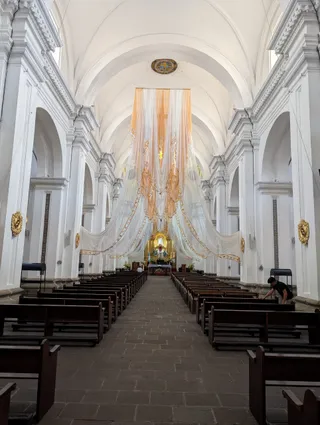
Before Hobbitenango, we'd stopped into La Merced again — it was decorated for something that day, with sheer orange and white fabric draped from the vaulted ceiling all the way down to the golden altar, completely different from how it looked our first evening.
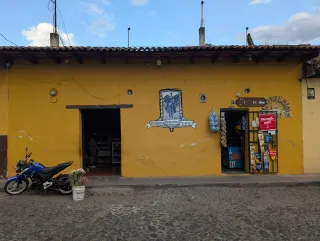
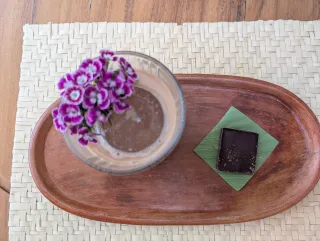
Later that afternoon we wandered over toward the San Francisco church / Hermano Pedro area on the south side of the historic center — there's a great little corner bakery there, Panadería Hermano Pedro, that's a good reminder Antigua isn't just a museum piece; people live and buy their bread here. We finished the day with hot chocolate and a square of dark chocolate at a little chocolate workshop nearby, which felt like the correct way to end a day that started with hobbit holes.
Day 5: A Slow Morning, Then Cerro de la Cruz
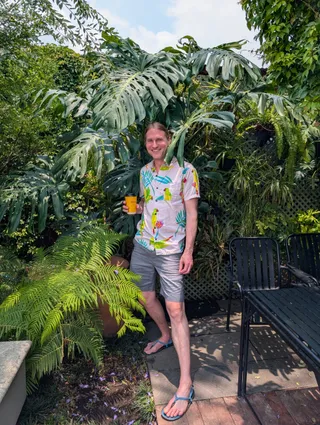
Our last full day, we didn't rush. Coffee in the guesthouse garden under a huge monstera plant, in no hurry to be anywhere — sometimes the best travel photo is just a McDonald's McCafé cup and a ridiculous parrot-print shirt in good morning light.
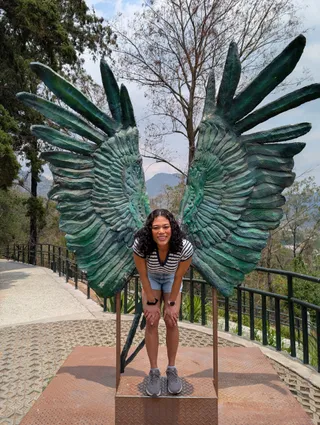
Late morning we walked up to Cerro de la Cruz, the hilltop lookout on the north edge of the city that gives you the postcard view of Antigua's grid of terracotta roofs with Volcán de Agua rising behind it. There's a big pair of bronze wings set up near the overlook for photos — we'd seen similar wing installations elsewhere and couldn't resist.
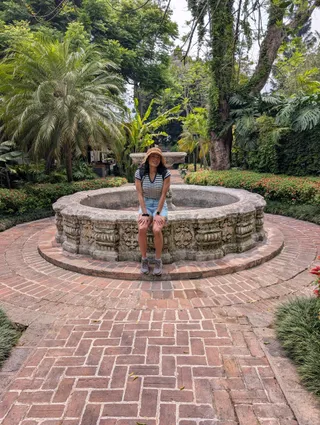
We spent our last couple of hours in a courtyard garden we stumbled into behind an unmarked door — palms, ferns, a stone fountain worn soft with age, water trickling out of a carved ram's head. No idea if it was a restaurant, a hotel, or a museum, and it didn't matter. It was the right note to end the trip on: quiet, green, and a little bit hidden, which is sort of what Antigua does best once you get past the main square.
Practical Tips for Visiting Antigua
Best time to go: Antigua's dry season runs roughly November through April, so late April (like our trip) is right at the tail end of it — expect warm days, cool evenings, and a decent chance of clear volcano views.
Altitude: Antigua itself sits around 5,000 feet, and the Pacaya trailhead adds more elevation on top of that. Nothing extreme, but pace yourself on the hike if you're not used to altitude.
Money: The currency is the quetzal (GTQ). Cards work in most restaurants and hotels in town; bring small bills for tips, tuk-tuks, and market stalls.
Getting around: Antigua's historic center is entirely walkable, and cobblestones are everywhere — pack shoes you don't mind beating up.
Book Pacaya through a reputable tour operator rather than showing up on your own; it includes the guide, transport, and (usually) the marshmallows.
FAQ
How many days do you need in Antigua, Guatemala?
Three days covers the highlights; five, like we did, gives you room for a volcano hike and a day trip without feeling rushed.
Is Pacaya Volcano hike hard?
It's moderate — a couple of hours of steady uphill walking on dirt and then loose volcanic rock. Reasonably fit hikers will be fine; just wear real shoes.
Is Hobbitenango worth the trip from Antigua?
Yes, especially for the views — on a clear day you can see four volcanoes from the ridge. Go in the morning for the clearest skies.
Is Antigua, Guatemala safe for tourists?
The historic center is well-trafficked and generally considered safe for visitors who take normal precautions, though as with any destination it's worth checking current travel advisories before you go.